
The eerie feeling that pervades one’s body as they look upon a ghostly beach, is something hard to pin down. The crystal water invokes a primordial longing to plunge in and fluctuate with the tide, whilst internally you are tormented by the vast, boundless, cerulean ocean. No flags are at this beach, yet the water appears tame. No people, not even striding along the foreshore. Only signs that read “Danger, No swimming allowed” with a nightmarish picture of a shark lurking just below the waterline. For many eager beachgoers this summer this was no story, but the stark reality.
Within a period of 48 hours, Sydney’s world-renowned beaches became the sights of 3 Shark attacks with a fourth occurring merely several hours north of Sydney at Port Macquarie.
What happened?
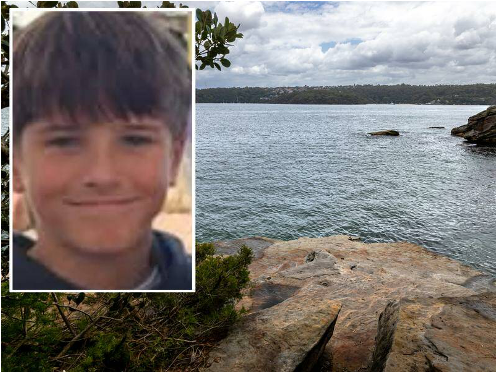
The calamity all began on Sunday the 18th of January when Nico Antic, a 12-year-old boy who was rock jumping around the headland from the newly developed Nielsen Park beach. In a statement to the press, Kellie Sloane, member for Vaucluse commented: “Like so many of our kids, Nico was enjoying the beach on a beautiful Sunday afternoon — doing what generations of local kids have done before him, having fun at Jump Rock.” After leaping from the rock, he was horrifically mauled by a Bull Shark. He was rushed to hospital by police boats who had come charging from across the harbour to arrive within minutes of the attack. Lorena and Juan, Nico’s parents were heartbroken when they had to share the news of Nico’s passing. In an interview with the ABC, they described him as ” a happy, friendly, and sporty young boy with the most kind and generous spirit. He was always full of life and that’s how we’ll remember him.”
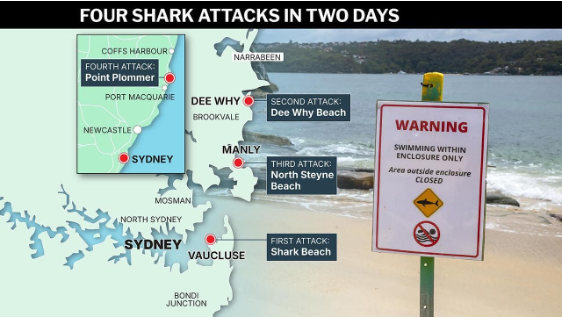
After a startling Sunday, the new horrors of Monday came unpredictably in the form of a double attack. At Manly, a 27-year-old man sustained critical injuries but was able to be saved after many days in hospital. Later that same day an 11-year-old’s surfboard returned to the beach with a bite mark in the side, luckily, he was not physically injured. The following day brought more woe as a 39-year-old man was bitten on the chest while surfing near Port Macquarie, narrowly avoiding serious injury.
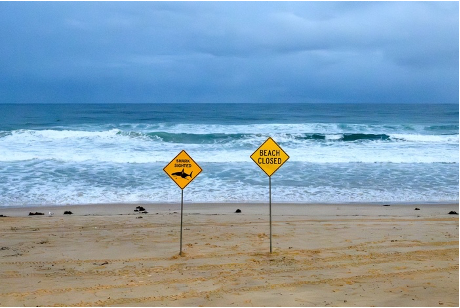
Numerous more sightings of sharks in the harbour, at Garie Beach in the Royal National Park where three sharks were spotted. These attacks and sightings caused the closure of 20 of Sydney’s beaches and brought an ocean loving nation to its knees. Many people began to question how these tragedies had occurred and what we could do to stop them. Galeophobia became widespread as the public became tentative to renter the water.
Why did they happen so suddenly?
The week before the attacks there was a heavy storm passing Sydney, during which the city’s official weather station recorded 127mm of downpour within 24 hours – its wettest January day in 38 years. This coupled with the warm summer water made Sydney Harbour a feeding ground. According to Rebecca Olive, senior research fellow at RMIT University the rainfall Sydney received would have created the “perfect conditions” for bull sharks who “thrive in warm, brackish water, which most other sharks flee. They love river mouths and estuaries, so the freshwater that flooded off the land following the recent rain events was perfect for them.”
Other experts noted that the freshwater would have flushed many nutrients sewage into the Harbour and ocean causing an influx in the number of baitfish at the surface of the water who fed on the nutrients. This caused the sharks to come to the surface to eat the bait fish but finding humans instead.
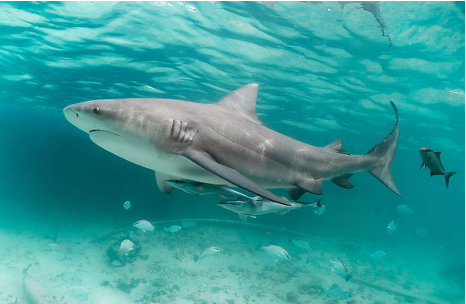
It must be noted though, that sharks are not actually interested in eating humans. We are not part of their diet and usually the attacks are because of mistaken identity, usually they think we are seals.
Gavin Naylor, director of the Florida Program for Shark Research stated, “If these animals are chasing bait fish, the flash of the white sole of a foot from someone kicking on a board might cause them to dart at it,” he says. “When you have a large animal like a tiger or a white shark, which move quickly, a bite is far more likely to be fatal.”
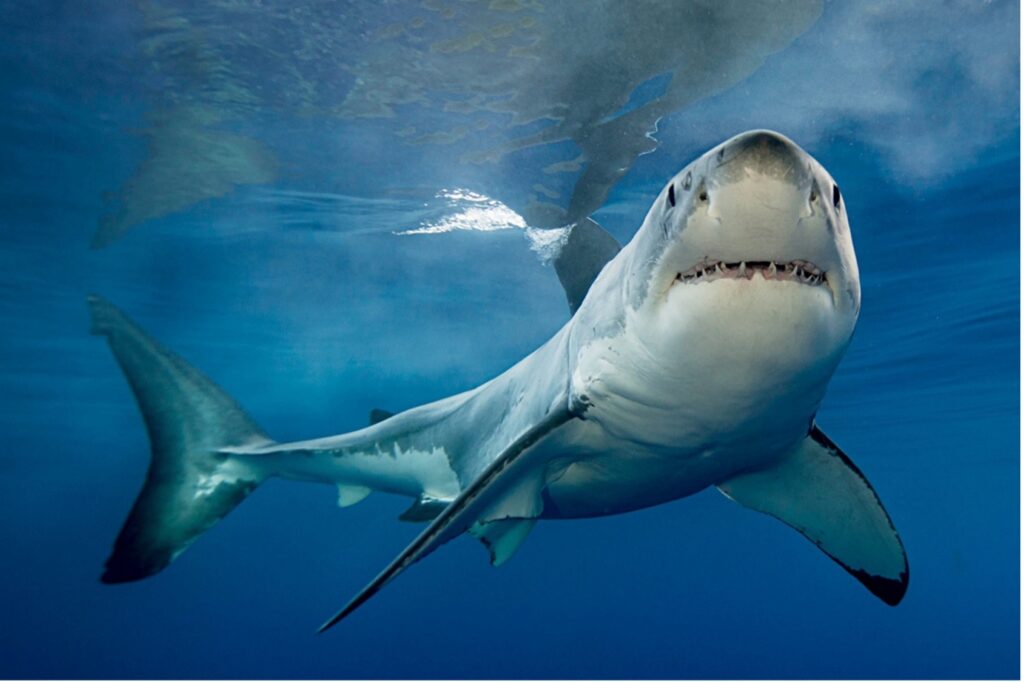
The hunting patterns of great whites usually consists of a sneak attack from below, delivering a massive catastrophic bite. It is because of this that many attacks from larger sharks can be fatal because the shark will take one huge bite. Release what they are eating is not seal, then return to the water, allowing their prey to bleed to death.
How can we avoid these attacks?
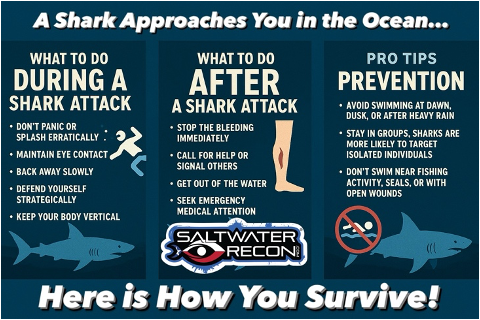
Many preventative measures are being created to deter sharks such as using magnets which can deter sharks by overwhelming their sensitive electroreceptors (Ampullae of Lorenzini) and causing sensory overload, forcing them to swim away. This technology is being tested for wetsuits, surfboards, and even on a large scale for beaches but likely is still several years away.
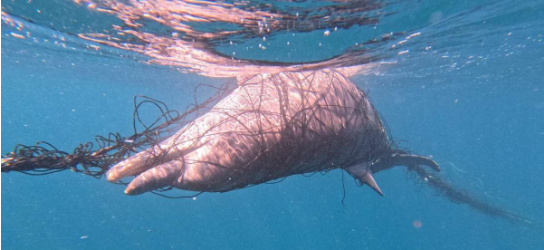
Obviously shark nets are still widely used however their effectiveness of late is being questioned. Often, they do not even reach the seafloor, so sharks are able to swim underneath the net. However, the greatest problem which shark nets pose is the threat they bring to the natural ecosystem of the ocean. In the summer of 2024/25 in New South Wales, 223 animals were caught by the nets with 89% of the catches being non-target species, including dolphins, turtles, and rays. This is why shark nets are generally considered outdated by most experts who are pushing for a new and innovative solution.
Whilst this ‘solution’ is being created, we all will still have to be cautious of the ocean and the threats it poses. As climate change causes the oceans to warm, bull sharks and tiger sharks who are both exothermic and often swim in waters of 22° – the temperature of Sydney Harbour in summer or further north in winter – will be spending more time in the waters around Sydney. It is projected that tiger sharks will be able to reach Tasmania by 2030 at the rate the ocean is heating.
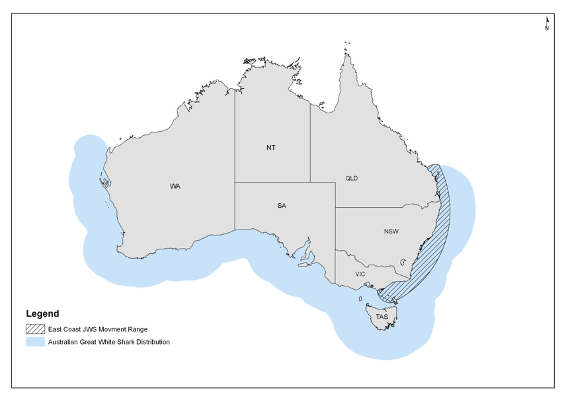
White sharks, however, are endothermic and so often dwell, in Summer, south of Sydney on a stretch of ocean near the NSW-Victorian border called the Twofold Shelf. Whilst in winter they venture up to northern NSW and southern Queensland. White sharks also frequent the East coast of Tasmania in the winter. As the ocean warms, the key nursery habitat at Twofold Shelf will become ever more crucial as ocean temperatures change which could cause a shift in white shark behaviour as they cannot venture as far north because of the heat. This would lead to a higher concentration on the shores of NSW and the possibilities of more fatal attacks.
Looking ahead, it is obvious that sharks will always be a threat to those who go in the water. We must accept the fact that the ocean is not our natural habitat, and we must respect the jurisdiction of the sharks for their own area. Before going in the water, it is the responsibility of the swimmer to make sure that the water is safe. It is not our fault when attacks happen, but nor is it theirs; they are accidents, anomalies, that can be prevented. From the tragedies of this summer, we must strive to develop new ways to be able to swim and coexist with the sharks whilst also not impeding upon them or their natural habitat. Sharks are essential ‘apex predators’ and play a key role in the ecosystem of the ocean, humans do not. Next time you step in the water do not be afraid of sharks but be wary. Wary of the dangers that the sharks pose but also of the unlikely nature of their attacks. If you do see a shark in the oceans, do not be scared. From a practical side of view the shark will only chance you faster if you show fear but be in awe of nature’s power and show it some respect.